
Indian companies are likely to keep raising salaries by about 15 per cent a year until 2011 as skills shortages overshadow concerns about higher input costs, according to Mercer, the consultancy.

Despite its admirable competence and proven track record, the RBI doesn't have the capacity to supervise an economy that's growing so fast and becoming larger by the year, points out T C A Srinivasa Raghavan.
The debate boils down to what path India should take in coming years as slower growth puts further poverty reduction at risk in the world's second-most populous nation.

'If there are any symptoms/variants of concern, states can prepare accordingly.'

The rhetoric that we are fed daily needs to be measured against performance and the facts. That is not happening, points out Aakar Patel.

The Tata group is planning to invest $90 billion in new industries such as mobile components plant, semiconductor, electric vehicles, batteries, renewables energy and e-commerce by 2027. The Tata group's investment in India is far higher than the $75-billion investments planned by Mukesh Ambani-owned Reliance Industries and $55-billion investment planned by the Adani group in the next five years in the country, the Economist reported recently. The investment by the Tata group is a shift in its strategy to focus more in the home markets instead of international markets where the group lost money.

Expenditure on new projects slowed down for the second quarter in a row amid an uncertain global environment and higher borrowing costs. There were new projects worth a cumulative Rs 3.26 trillion in the July-September period, according to data provided by project tracker Centre for Monitoring Indian Economy (CMIE). This figure is much less than Rs 4.39 trillion in the June quarter (Q1FY23) and Rs 8.46 trillion in the March quarter (Q4FY22).

AI will continue to grow in capacity, and the newer versions will keep us in a state of hypnosis. But there would still be a shadow of uncertainty, predicts Atanu Biswas.

Fitch Ratings on Thursday slashed India's GDP growth projection for FY23 to 7 per cent, saying the economy is expected to slow against the backdrop of global economy, elevated inflation and high interest rate. In June, it had forecast 7.8 per cent growth for India. "We expect the economy to slow given the global economic backdrop, elevated inflation and tighter monetary policy. "We now expect the economy to grow 7 per cent in the financial year to end-March 2023 (FY23) from 7.8 per cent previously, with FY24 also slowing to 6.7 per cent from 7.4 per cent before," Fitch said in its September edition of the Global Economic Outlook.

While weather forecasters remain divided on how the monsoons will play out in India over the next few months, analysts believe the news at the current juncture - at best - can trigger a knee-jerk reaction in the markets. They believe it is too early to say whether the sub-par monsoon on account of El Nino can seriously dent the market sentiment in the short-to-medium term. "These are just initial forecasts and we will have another round / status update from the weather forecasters a month down the line.

India's merchandise exports in June rose by 16.78 per cent year-on-year to $37.94 billion while the trade deficit ballooned to a record $25.63 billion on account of a steep increase in gold and crude oil imports, according to the government's preliminary data released on Monday. The export growth in June moderated from 20.55 per cent in May and 48.34 per cent in June 2021. During the month under review, exports of engineering, pharmaceutical and plastic products recorded negative growth.

Later, Sitharaman's office clarified that the FM had already met the industrialists, experts, and economists during the pre-budget consultations.

The Indian economy will expand by 5.6 per cent during 2014-15 even as the Reserve Bank is not likely to cut interest rates this year, according to Ficci's latest Economic Outlook Survey.

India's exports are unlikely to get an immediate boost from a depreciating rupee, which touched an all-time low on Monday, driven by rising commodity prices. The rupee fell to 76.97 against the dollar earlier in the day, settling 1.05 per cent weaker than the previous close. Oil prices soared to their highest since 2008 on Monday at $139 per barrel, after the US and European allies explored a Russian oil import ban, while delays in the potential return of Iranian crude oil to global markets increased supply fears.
"India's economic fundamentals are quite robust and its economy remains the second-fastest growing one in the world," the prime minister's Economic Advisory Council's chairman Suresh Tendulkar told reporters in Mumbai. According to him, the financial meltdown in advanced economies 'has been very serious'.

For the banking system a new cycle starts in FY2024. It's fraught with fresh challenges on asset quality and profitability, warns Tamal Bandyopadhyay.

'The term 'pro-growth' must be qualified somewhat because, while a rising tide will lift all boats, it will not necessarily do so equally.'

Robust growth in indirect tax receipts points to a nascent revival in manufacturing sector.
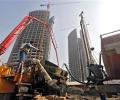
A moderate recovery in Indian factories, exports and investments were probably the main drivers for an increase in overall growth in the quarter through March.

It is a trend that economists and researchers say might continue. The data shows the share of this age group in the net EPF accounts created - a proxy for net new formal jobs created - fell from 37.9 per cent in 2018-19 to 24.1 per cent in 2021-22.

'Government's focus should be on the expenditure side in this Budget, not so much on the taxation side.'

Of $90 billion remittances that India is expected to receive in 2022, only $27.4 billion has come in the first half of the year.

'The question is, how soon we can expect to re-attain the pre-lockdown levels of output and income.'

'When the average growth in the last three years was just 2.5%, how does that make us the fastest growing country?' 'They only tell you what has happened in the last 2 years; they are not taking into account what happened in FY21 on account of their mistakes.'

India is likely to be the fastest-growing Asian economy in 2022-23, according to analysts at Morgan Stanley. They expect India's gross domestic product growth to average 7 per cent during this period - the strongest among the largest economies - and contributing 28 per cent and 22 per cent to Asian and global growth, respectively. The Indian economy, they said, is set for its best run in over a decade as pent-up demand is unleashed.

'The time has come to ask the extent of coercive power the State must arrogate to itself to achieve economic ends,' points out T C A Srinivasa Raghavan.

'The corruption charges in FCI are not the first and won't be the last.'

If that happens, India's economic size will be just shy of $20 trillion and its annual per capita income will be about $10,000, when the country celebrates its centenary of independence.

The Xi Jinping regime might try to quell internal distress by directing nationalism and militarism against India, warn Ajay Shah and Gautam Bambawale.

Rahul Gandhi said he had helped the party conceptualise its 'Nyay' scheme to help remonetise the economy.
Let's take a look at GDP per person in 2011 and 2060 around the world, including India.
The external environment has worsened further. While the Finnish economy entered into a recession, Swedish economic growth also dipped. The Finnish gross domestic product (GDP) dropped 0.6 per cent in October-December, 2022. It was the second quarter of negative growth, which is a technical definition of recession.
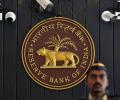
The Reserve Bank of India (RBI) is precariously balancing two opposing objectives - maintaining easy financial condition in the domestic market, while ensuring external stability - and economists have started taking note. They say India is going through the classic trilemma of the 'Impossible Trinity'. The RBI cannot have an independent monetary policy (setting domestic interest rates) in an environment of an open capital account and flexible exchange rates. What is even more complicated for the central bank now is that financial market stability overlays all the other three objectives.

108 economists, social scientists said it was imperative that agencies like CSO and NSSO are not subject to political interference.

The government should not go in for an 'aggressive fiscal consolidation' in the upcoming Budget as global risks have not abated, RBI Monetary Policy Committee (MPC) Member Ashima Goyal said on Wednesday. Goyal further said subsidies are expected to come down as food and energy inflation moderates. WPI inflation in food articles in November was 1.07 per cent against 8.33 per cent in the previous month.

The only real solution to the jobs crisis, whether in India or abroad, is to direct tech innovation towards job enhancing sectors, and disincentivising job-replacing ones, observes R Jagannathan.

'In the 1990s after we ushered in reforms, Paul Samuelson wrote me a letter expressing happiness that "at last, India has discovered economic growth."'

To equate the Hindu propensity not to persecute non-Hindus is a sign of mature self-confidence, not weakness as the rabid insist, asserts T C A Srinivasa Raghavan.
